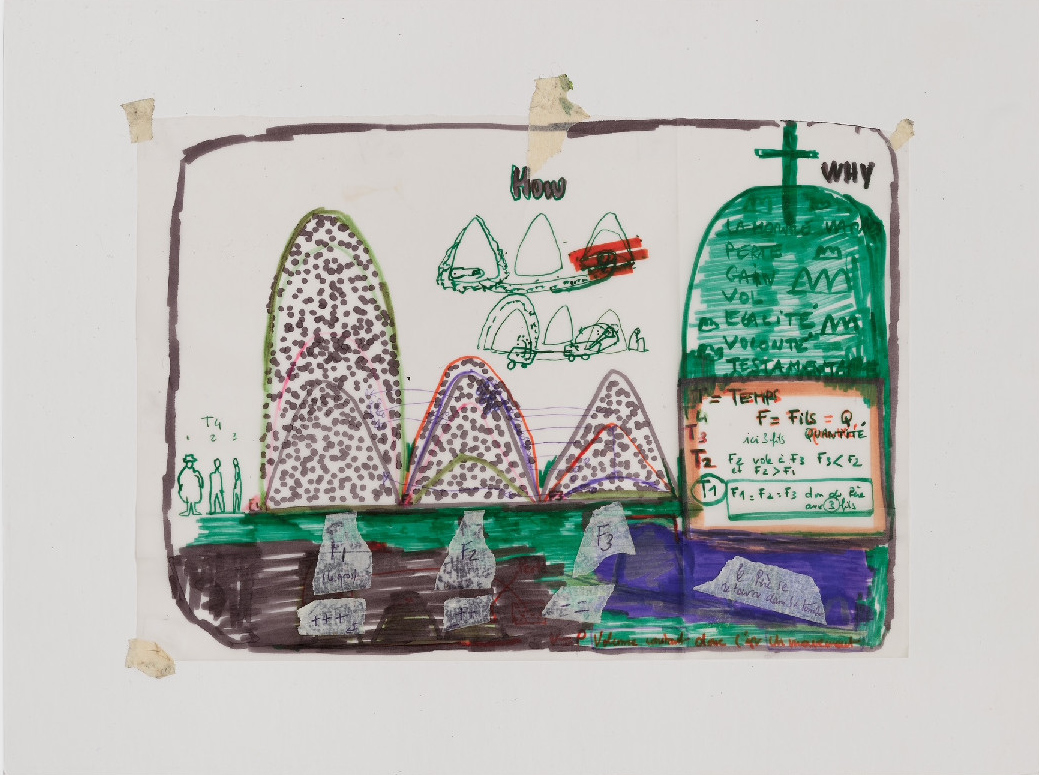
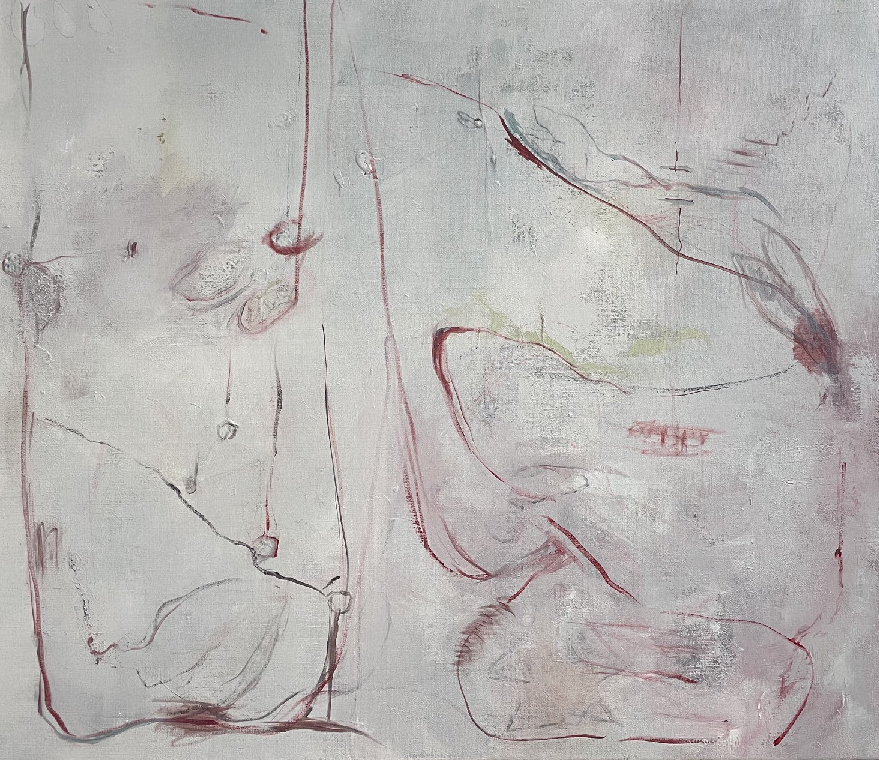
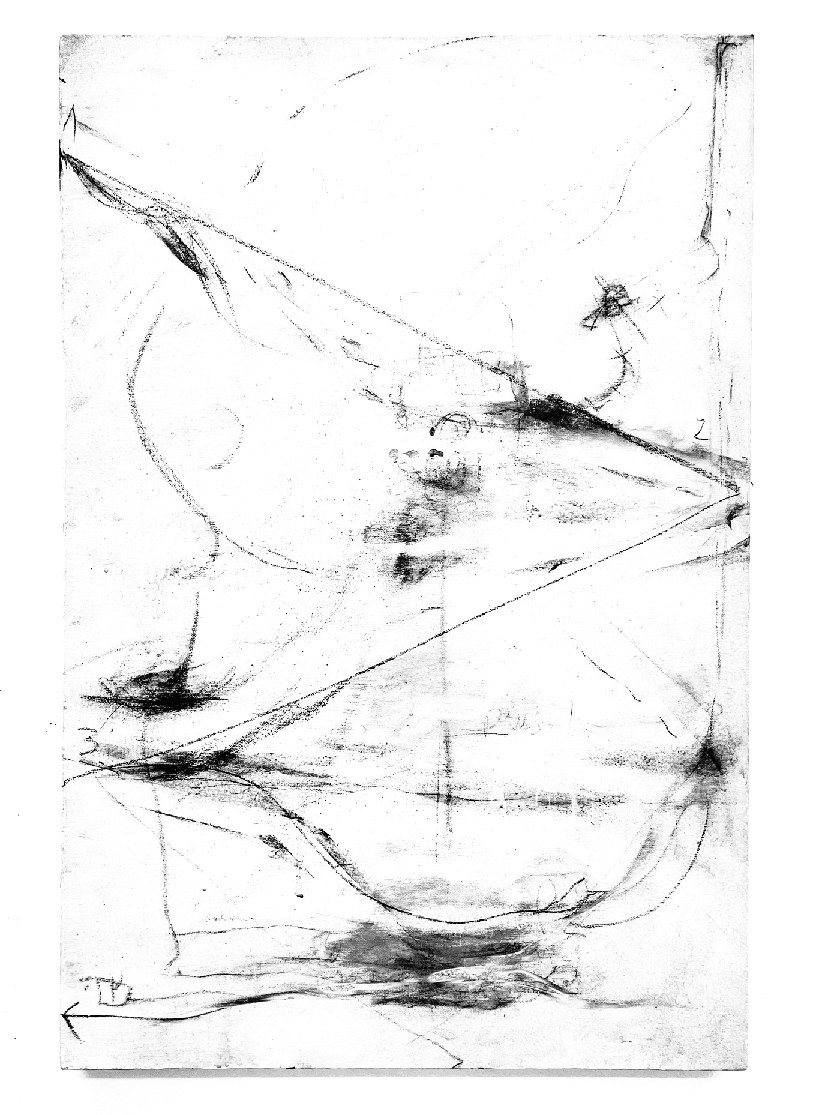
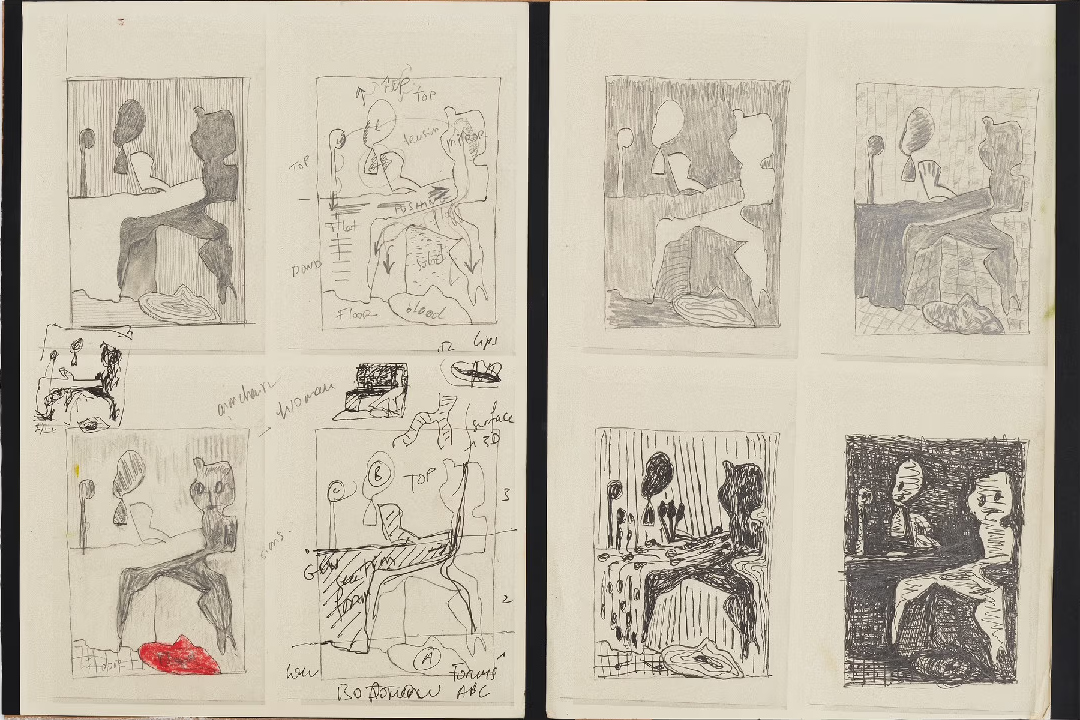
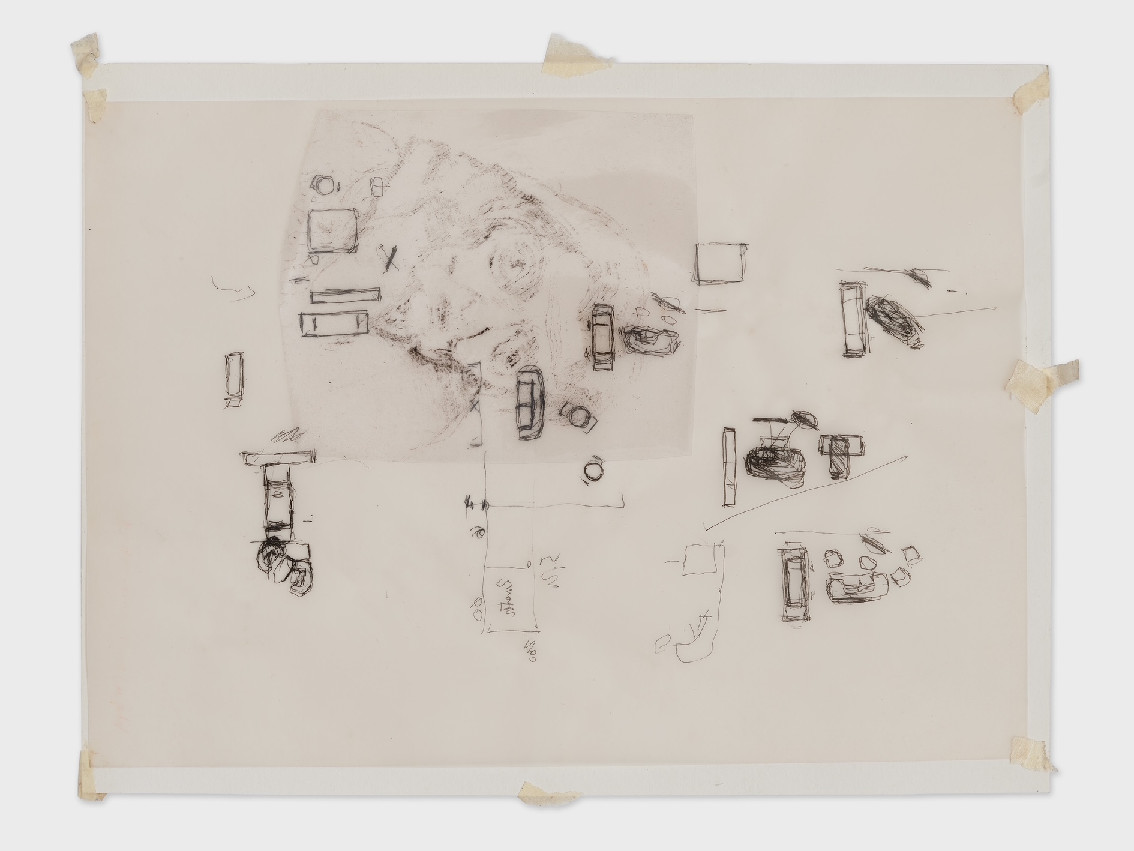
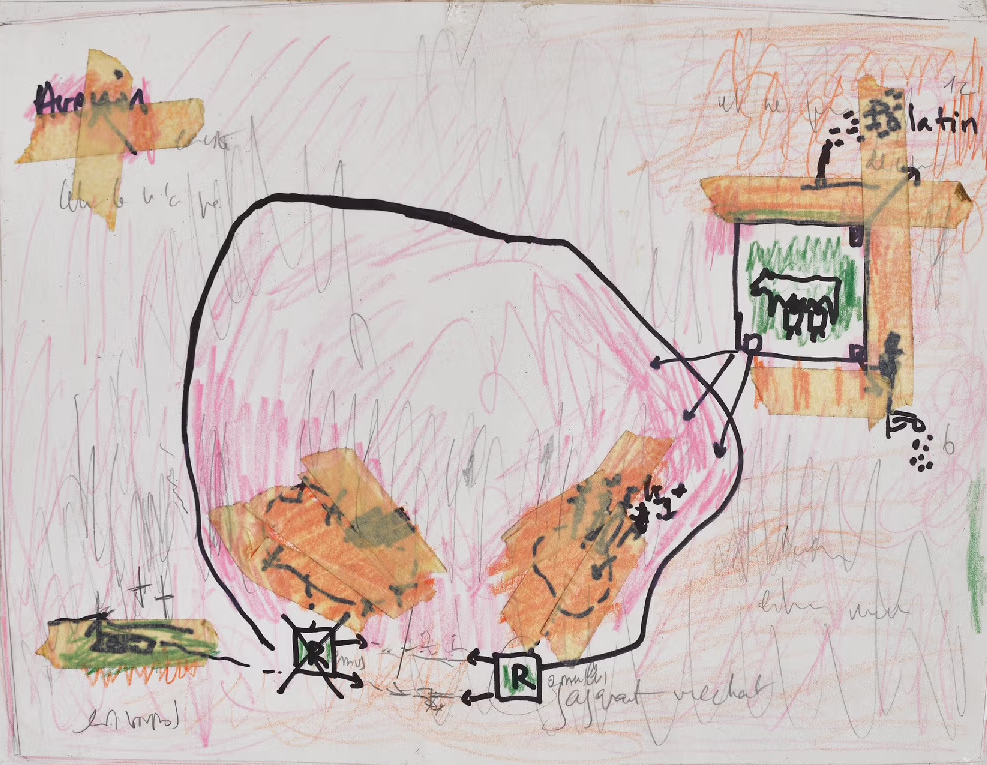
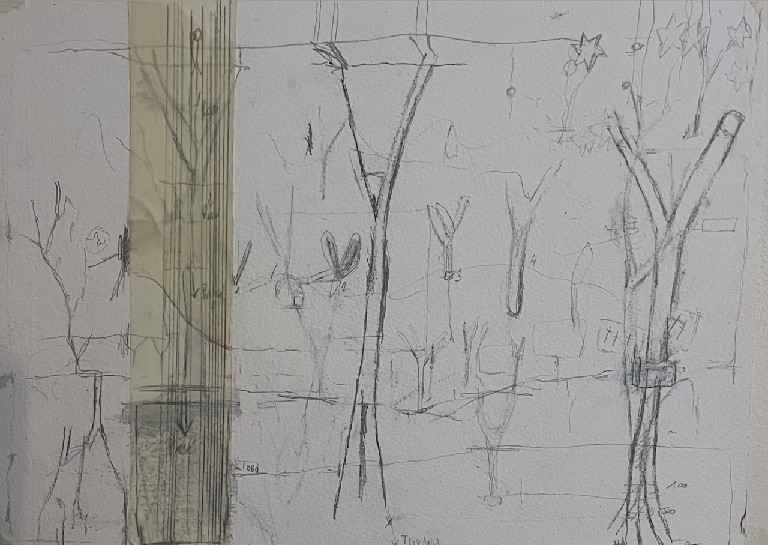
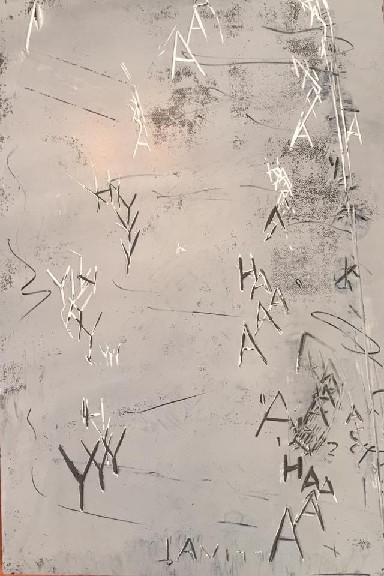
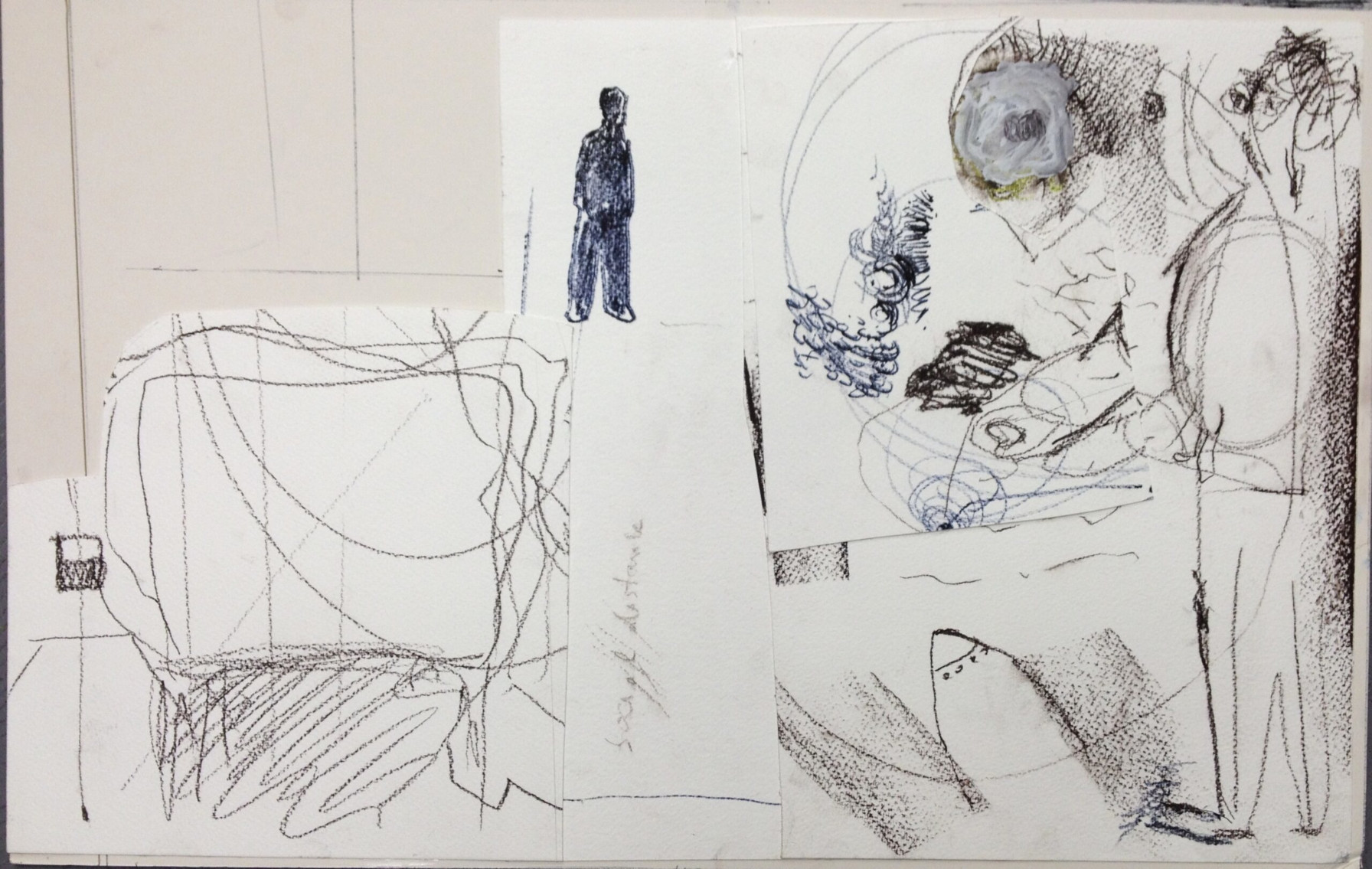
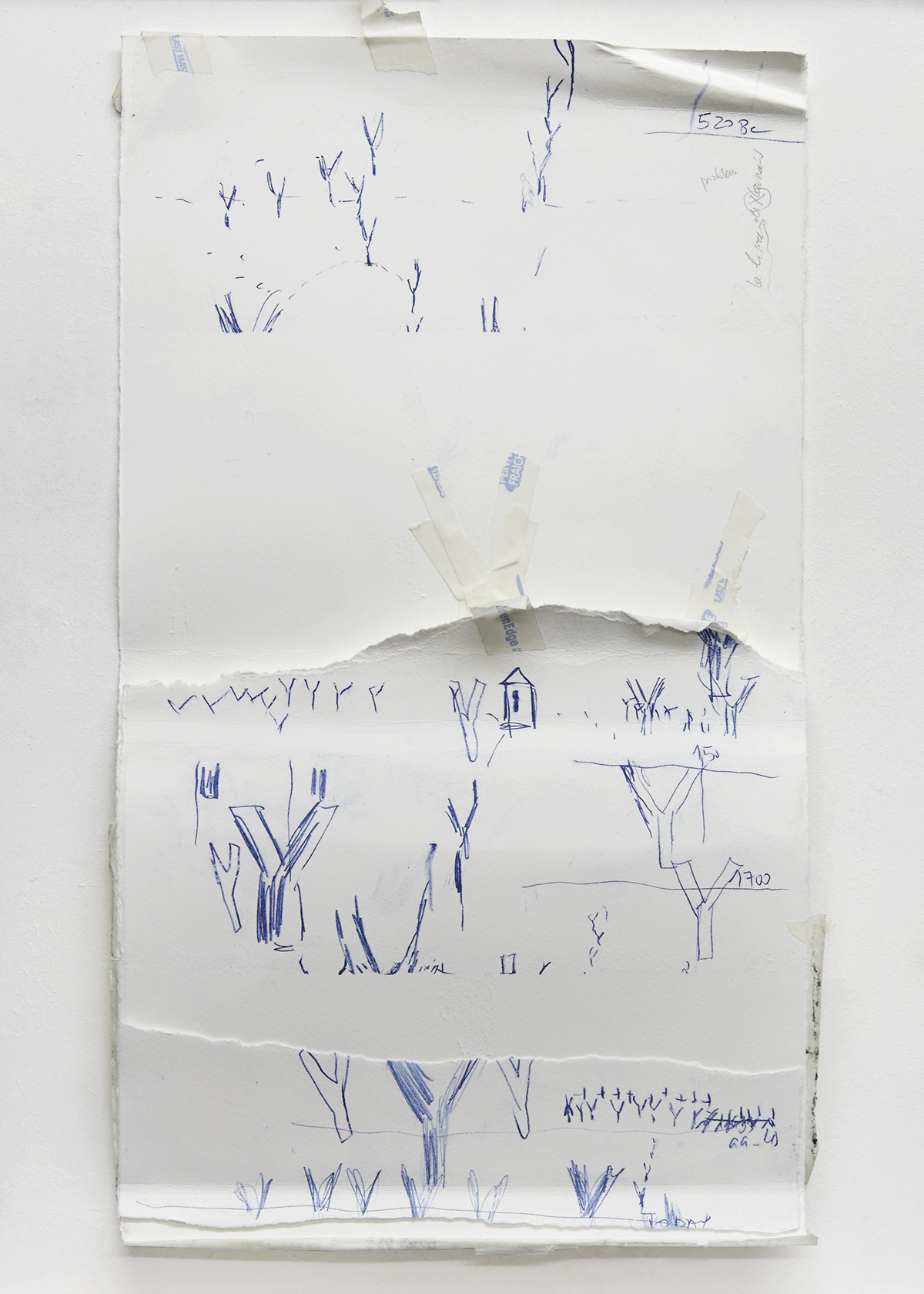
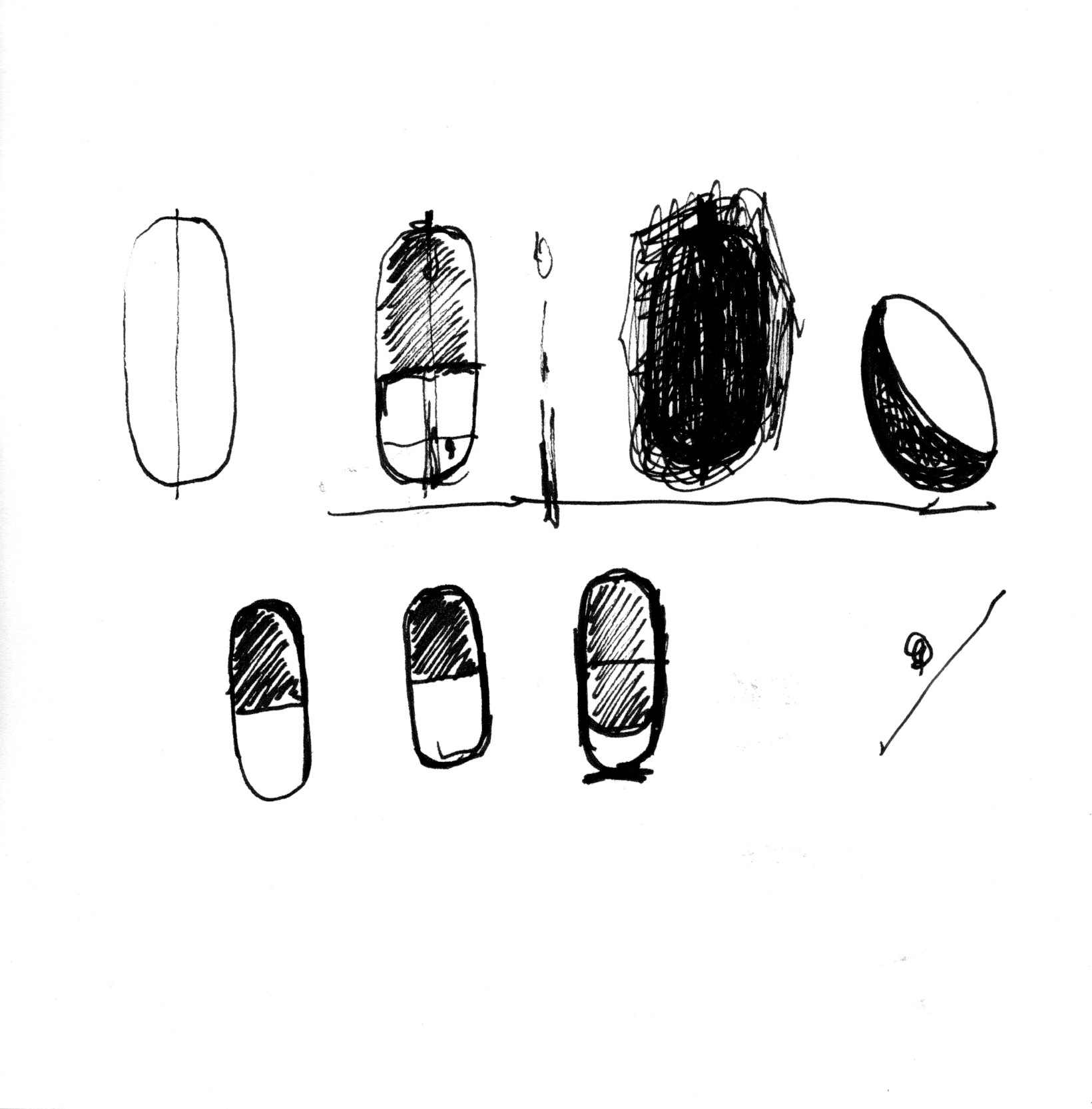
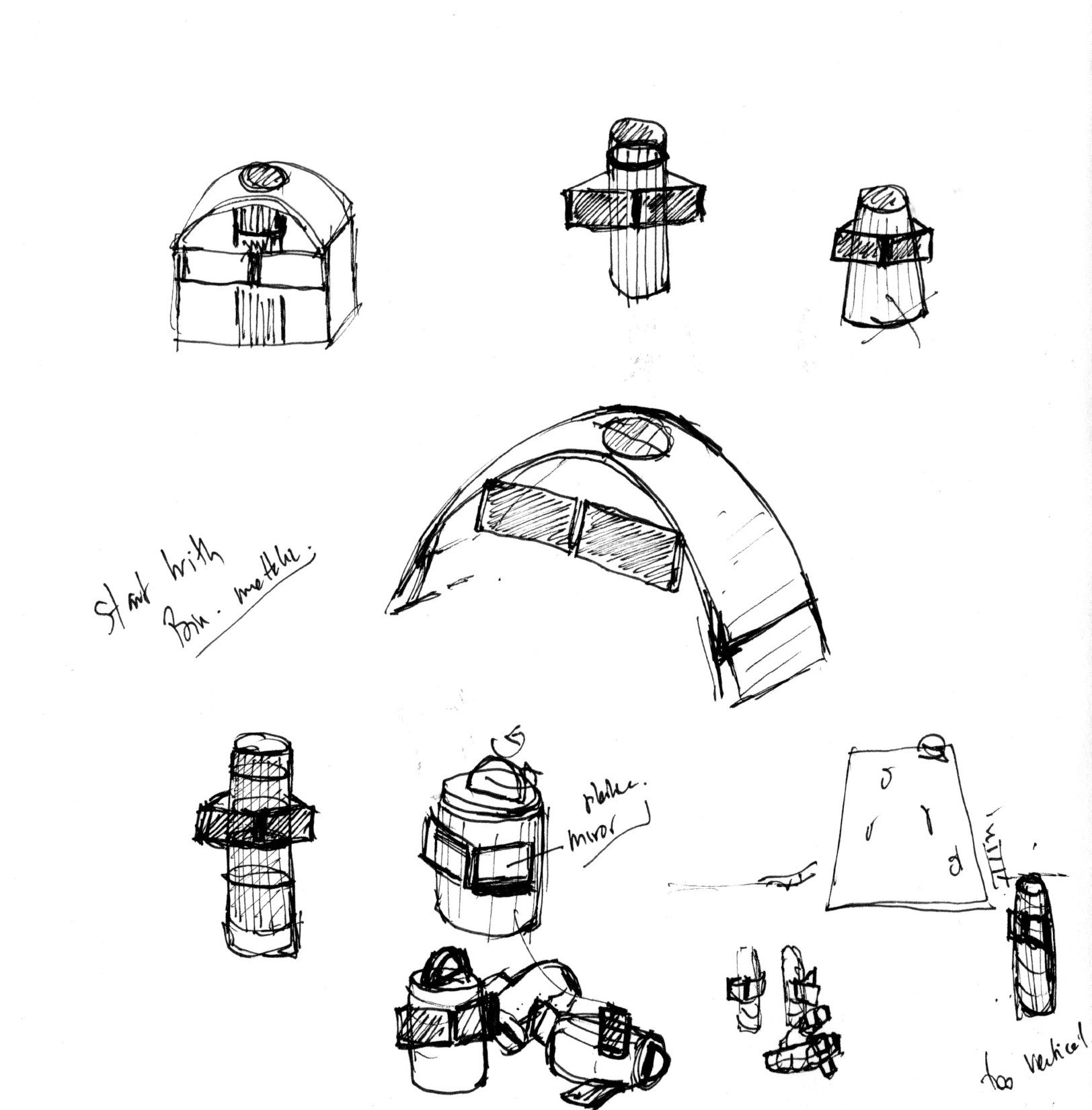
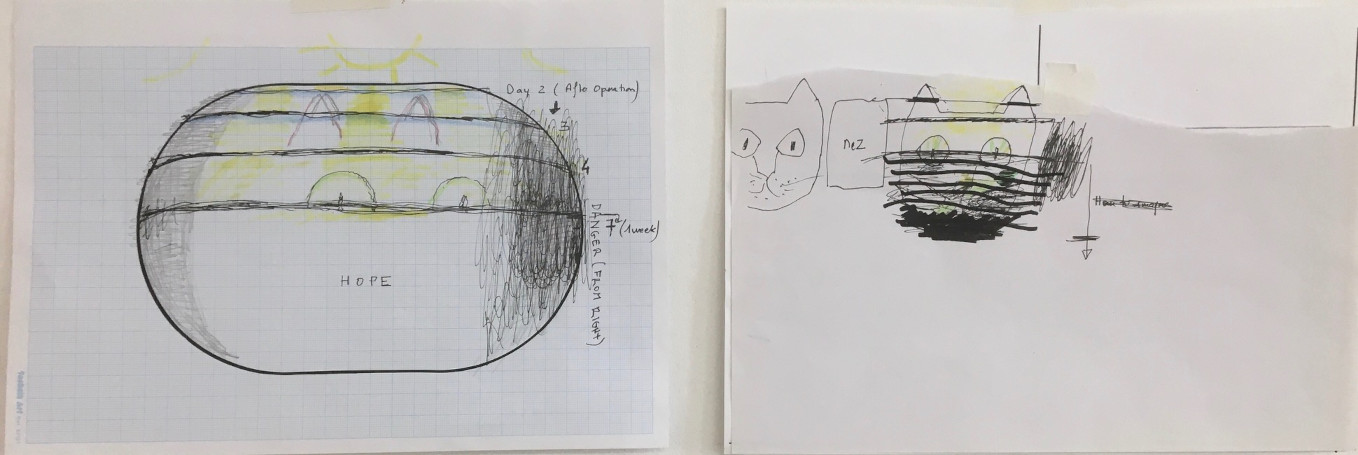
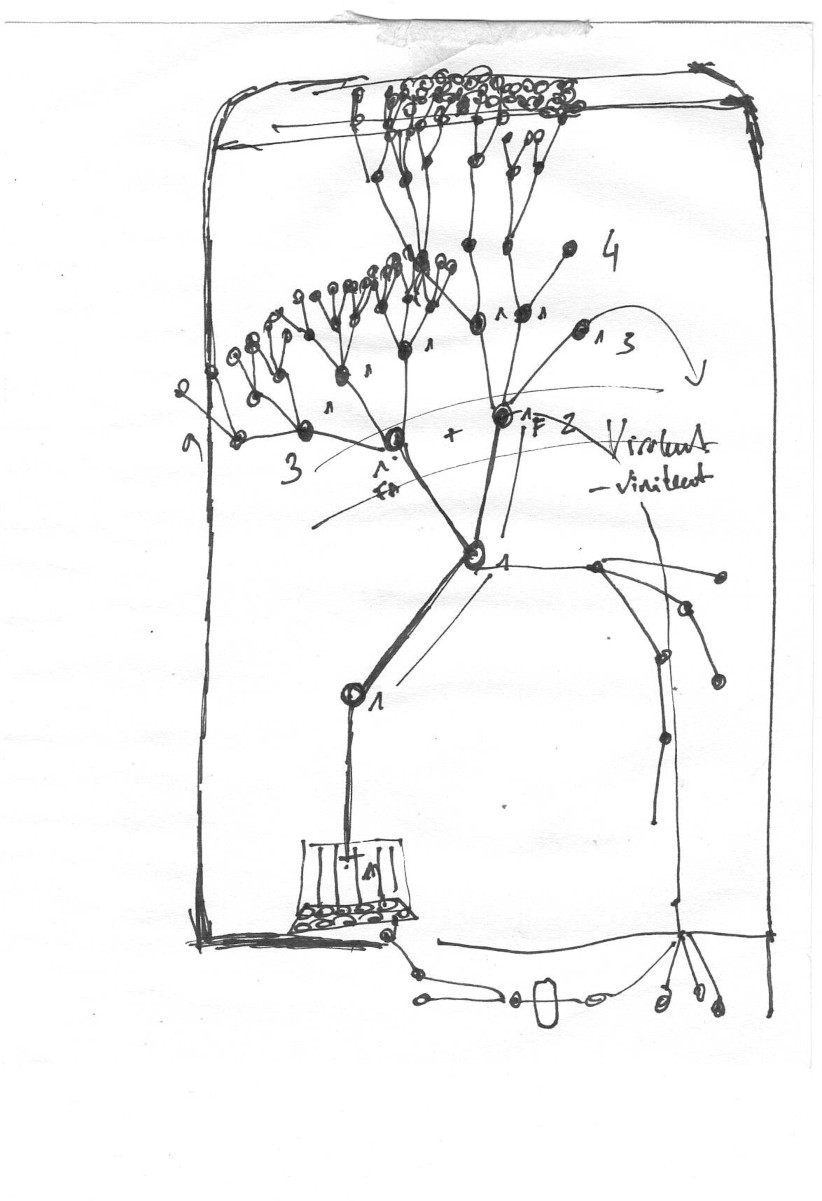
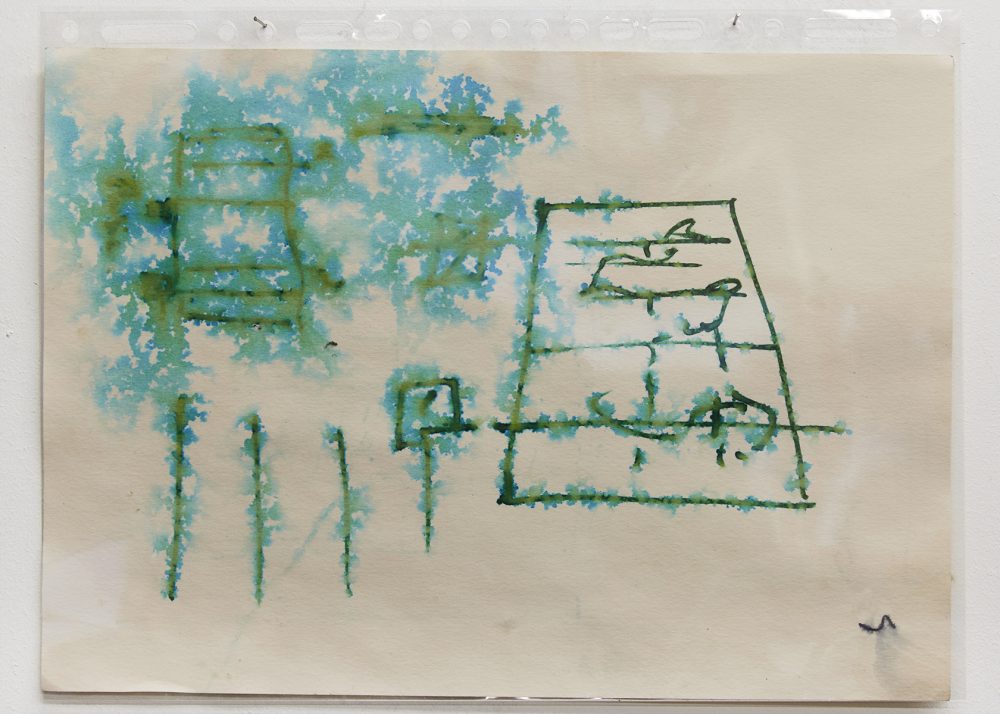
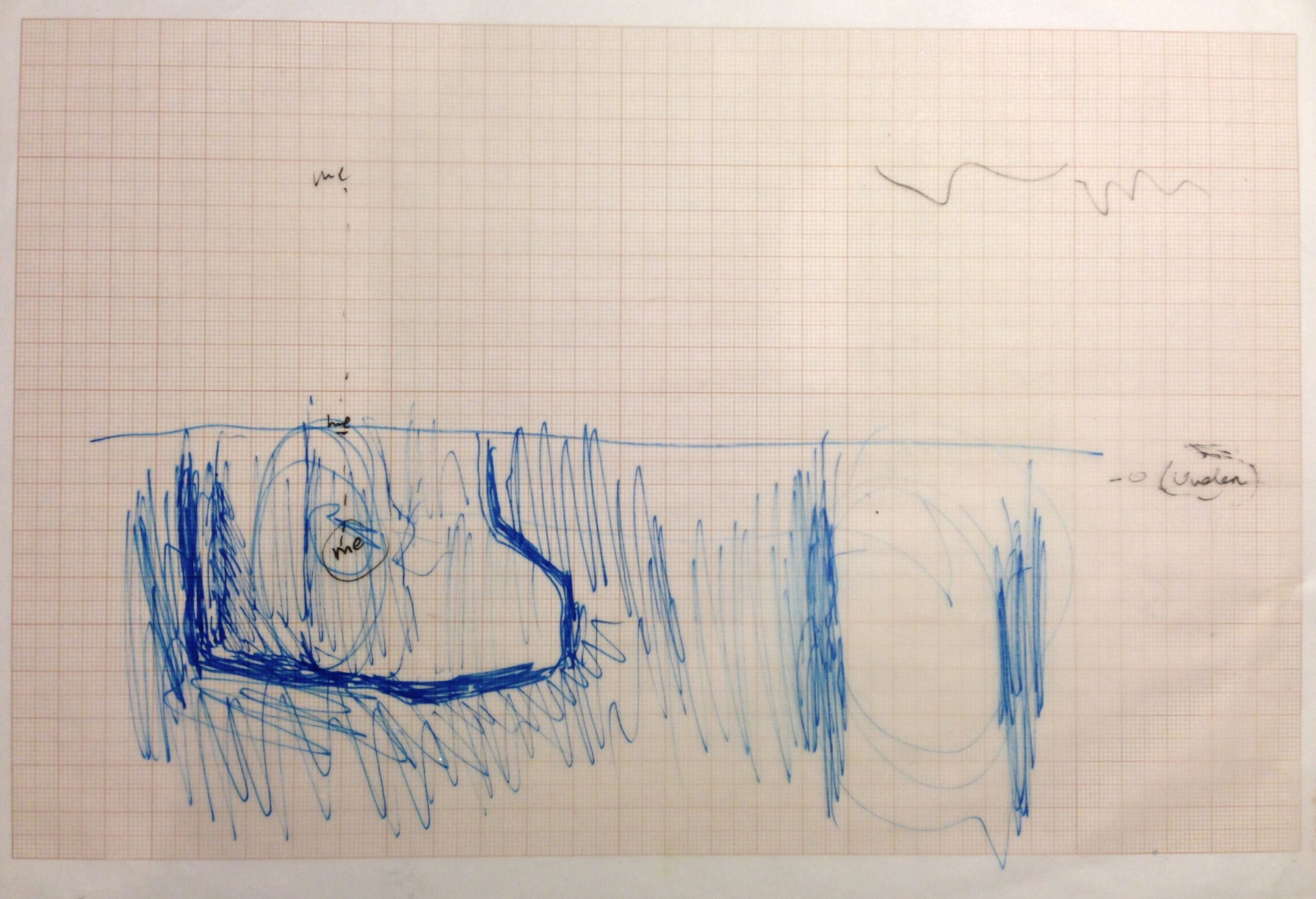
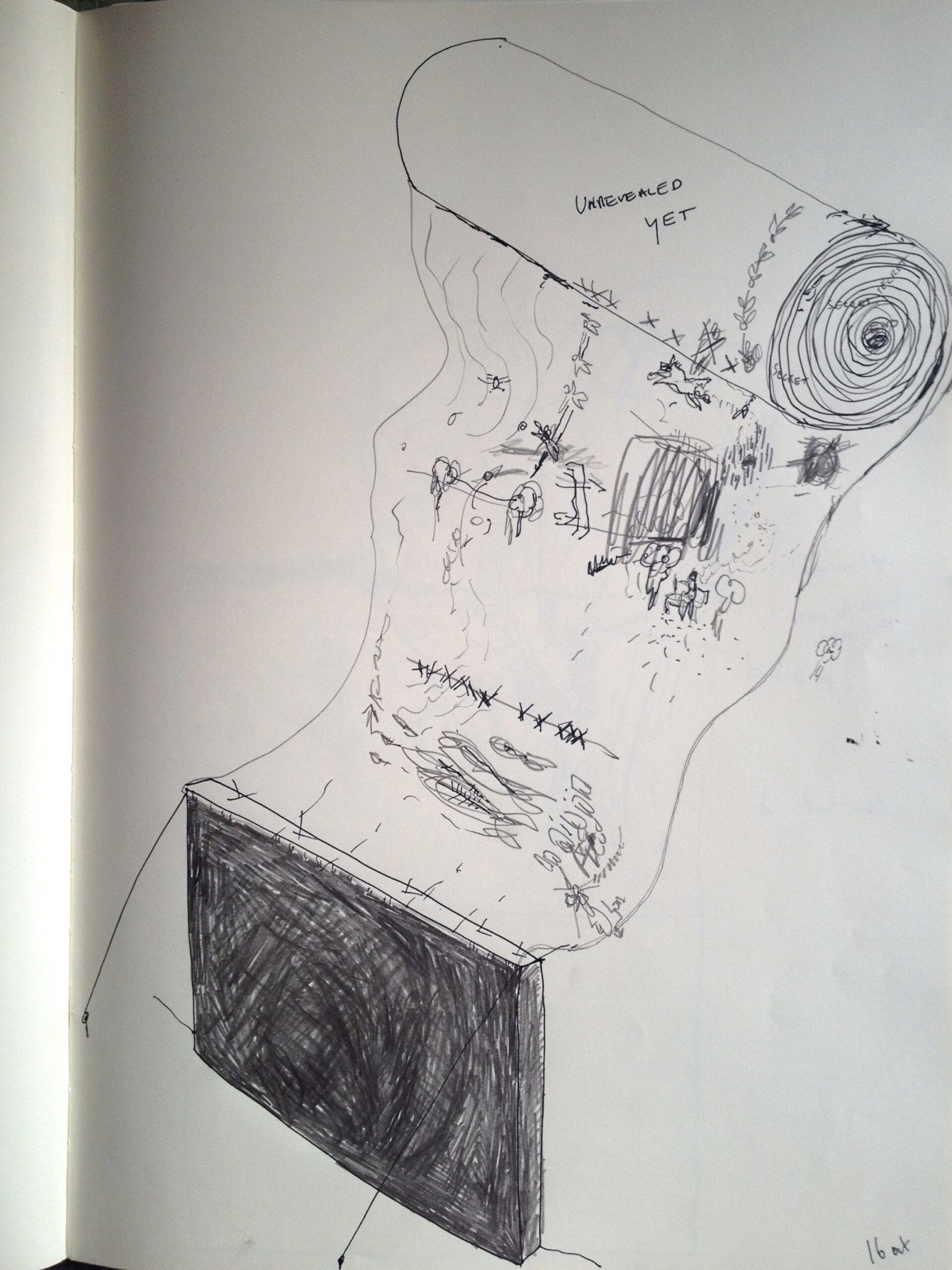
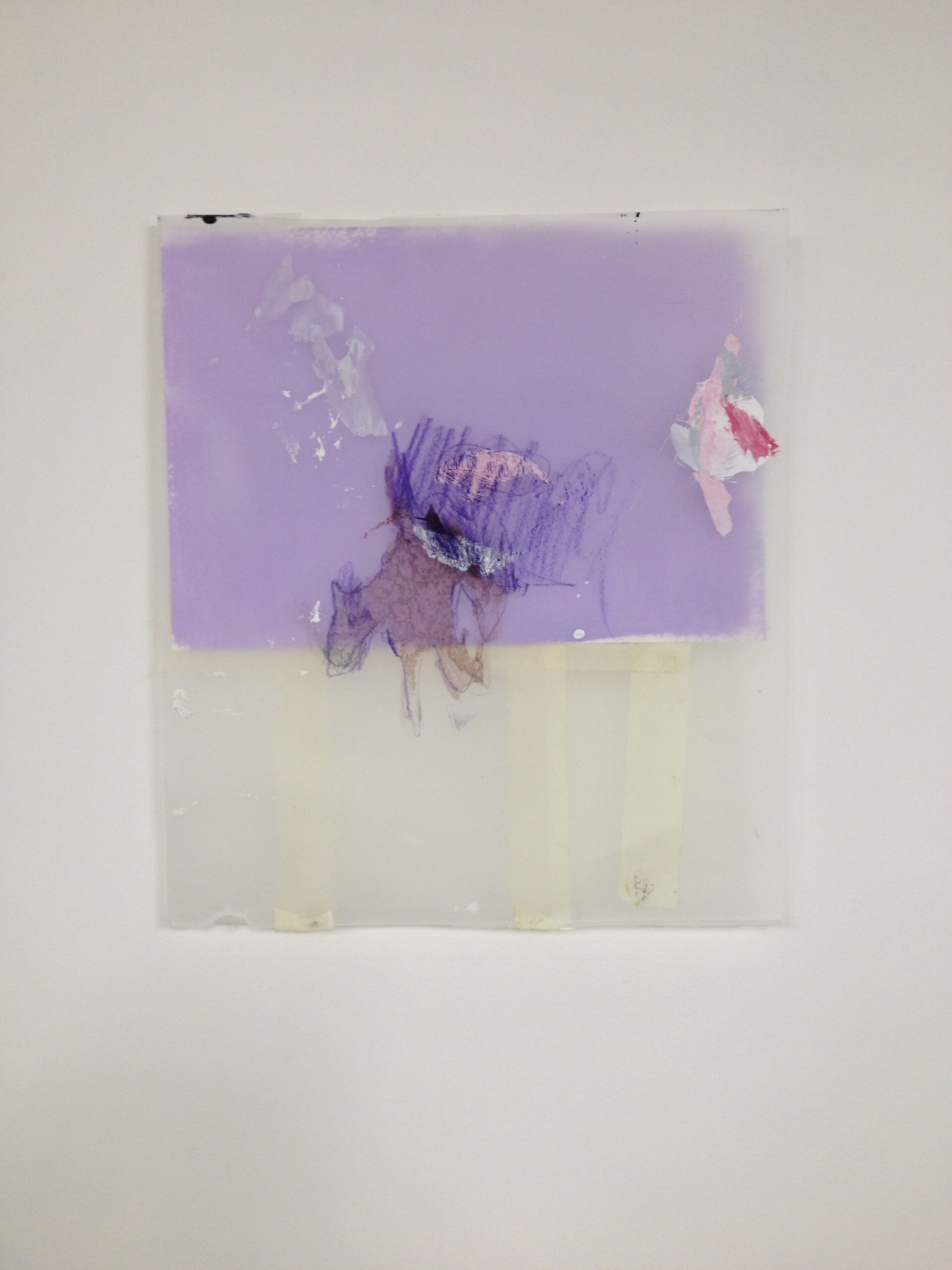
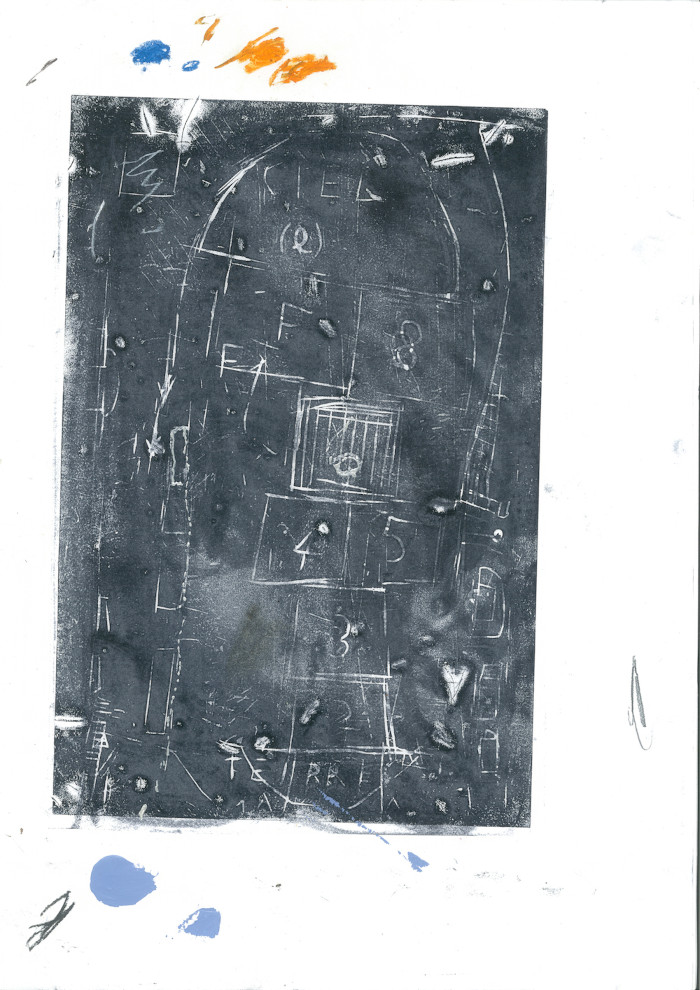
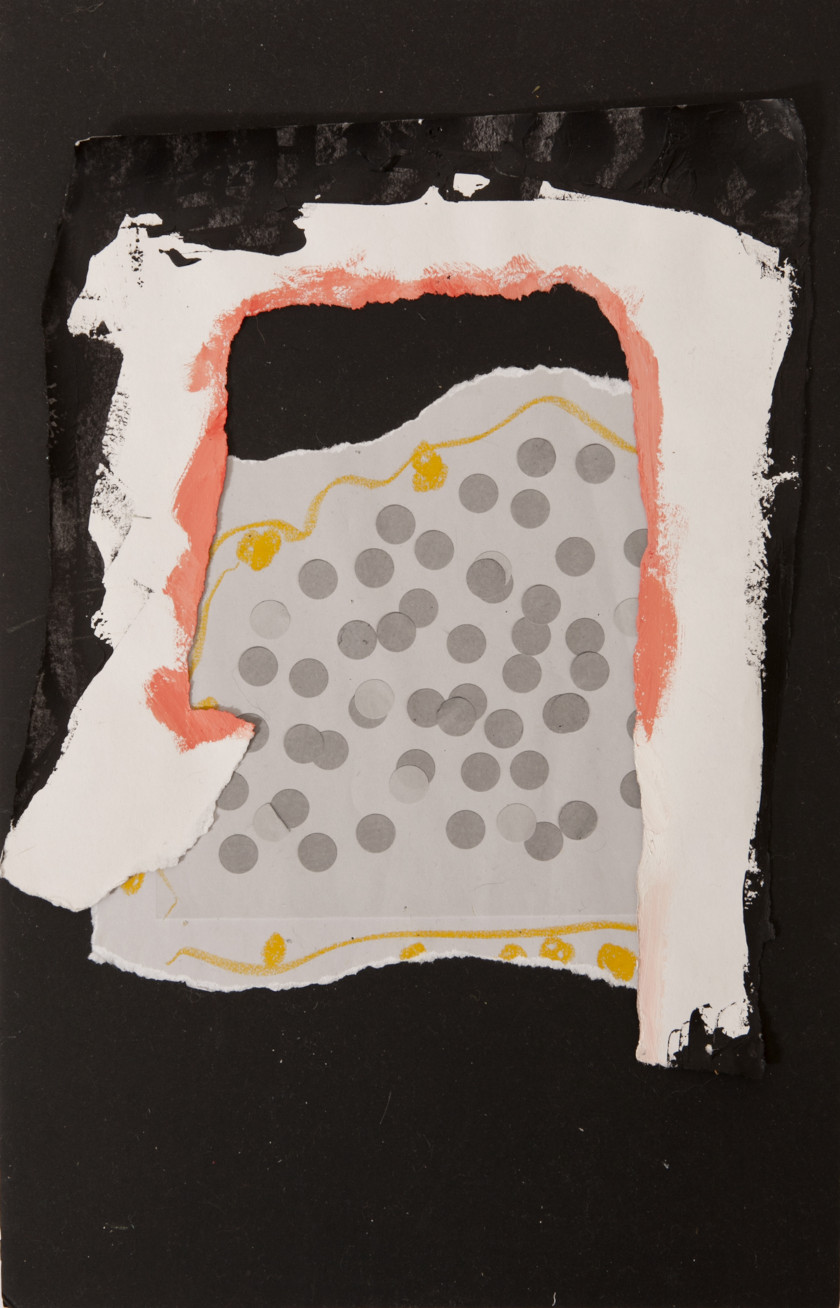
In my practice, drawing is a conceptual tool, whether it’s to create something or to explain it. It maps movements, it measures, it reflects. Captured in diagrams and charts, new connections are created at every turn, languages overlap.
Drawing is an excellent conceptual tool; my father, an architect and excellent draftsman, used to explain things to me with little sketches and arrows on bits of worn paper, napkins in cafés. From that, I kept the idea of drawing as a form of writing, more direct than words, which guides, informs, and also serves as memory. I only keep the drawings that convey an idea to be developed (conditional drawing) or remind me of something I’ve imagined or seen. Below is a selection.
My father would explain things to me with little sketches and arrows on napkins and tablecloths in cafes.
I saw in the drawing a form of writing, a direct access to information as well as a fantastic conceptual