ÊTRE CHARRETTE
Lorraine Thomas, James Tabbush
An artistic collaboration that brings together a sculptural work (Charrette) by Lorraine Thomas, a video by James Tabbush, the history of the object, and a great friendship.oire de l’objet et une grande amitié.
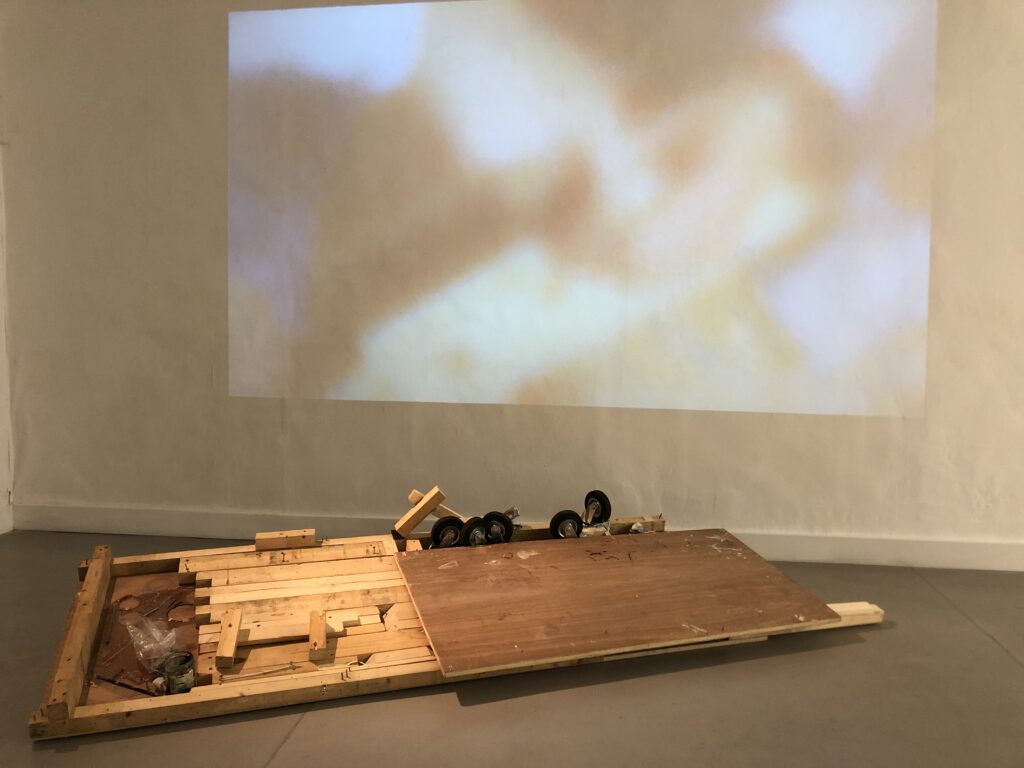
Being Charrette, photo of the installation, PAC 2020 Footprint
Charrette is a bit like the story of Noah’s Ark in reverse. It also leaves a country in rupture with Europe. (L T)
In 2013, Lorraine Thomas created Charrette during the deconstruction of a large storage unit in London. It successively becomes a storage unit, bench, single or double bed, familiar workshop object, art gallery object. Four years later, a divorce, Brexit, and the object becomes the symbol of the minimum home to migrate to. Dismantled for its transport to Marseille, the symbol of infinite movement is also destroyed.
“It is not Charrette that you will see exhibited but something entirely new,” Lorraine had declared before going to fetch her Charrette in London in July. “I tried to build this entirely new thing, but I realized that I didn’t need anything—Charrette was obvious, an object, a symbol, an ally, and a deconstructed obviousness is only sorrow. It is a catalog of the parts of Charrette that you see exhibited, nothing is missing, nothing has been added; the skeleton lies in its own envelope in the gallery, as if its story had never begun, or as if this were the end. It is the death of Charrette, the acknowledgment of the temporary impossibility of this quality of transformation inherent in everything that I am convinced of; it is perhaps the personification of the pause time necessary for the reintegration of new data. The object satisfies me because it is what it is, a non-being still.
James Tabbush’s video documents the process of deconstruction/reconstruction of the sculptural object. The film focuses on the physical manipulation of the object, time, the desire for assembly, more broadly questioning the life of goods that are dismantled and then packed by customs, traveling over the ocean or by air, reconstituting themselves in our daily lives, with their hidden stories. In the film, we rarely see the entirety of what is being done or decomposed, only the hands that undo the ties, create a new order, and catalog the remains. Entering and exiting the focus, these actions are part of a larger process of entropy and reintegration.
Below is a selection of photos that recalls the story of Charrette.
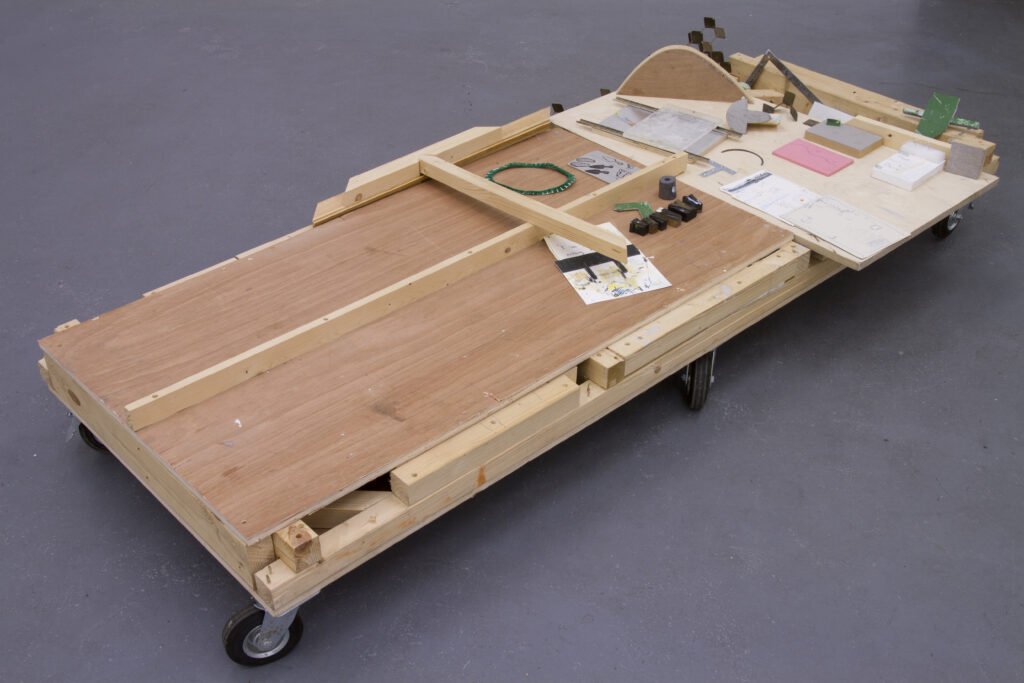
Charrette, exhibition picture, Turps Gallery, London 2016
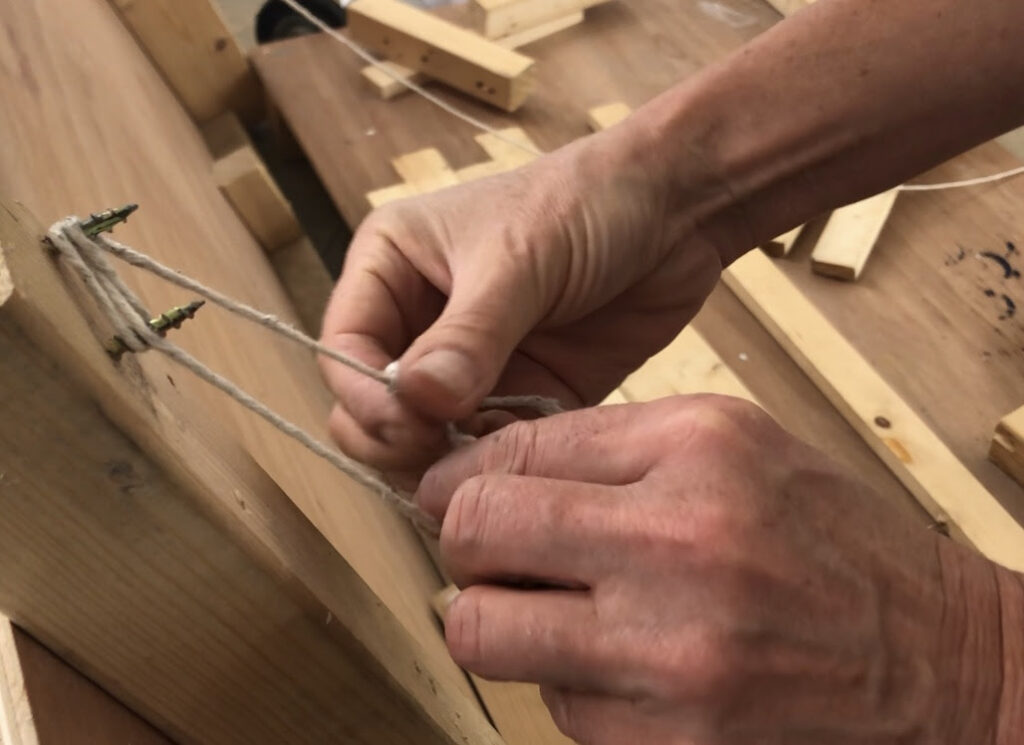
Deconstruction / reconstruction process, marseille 2020
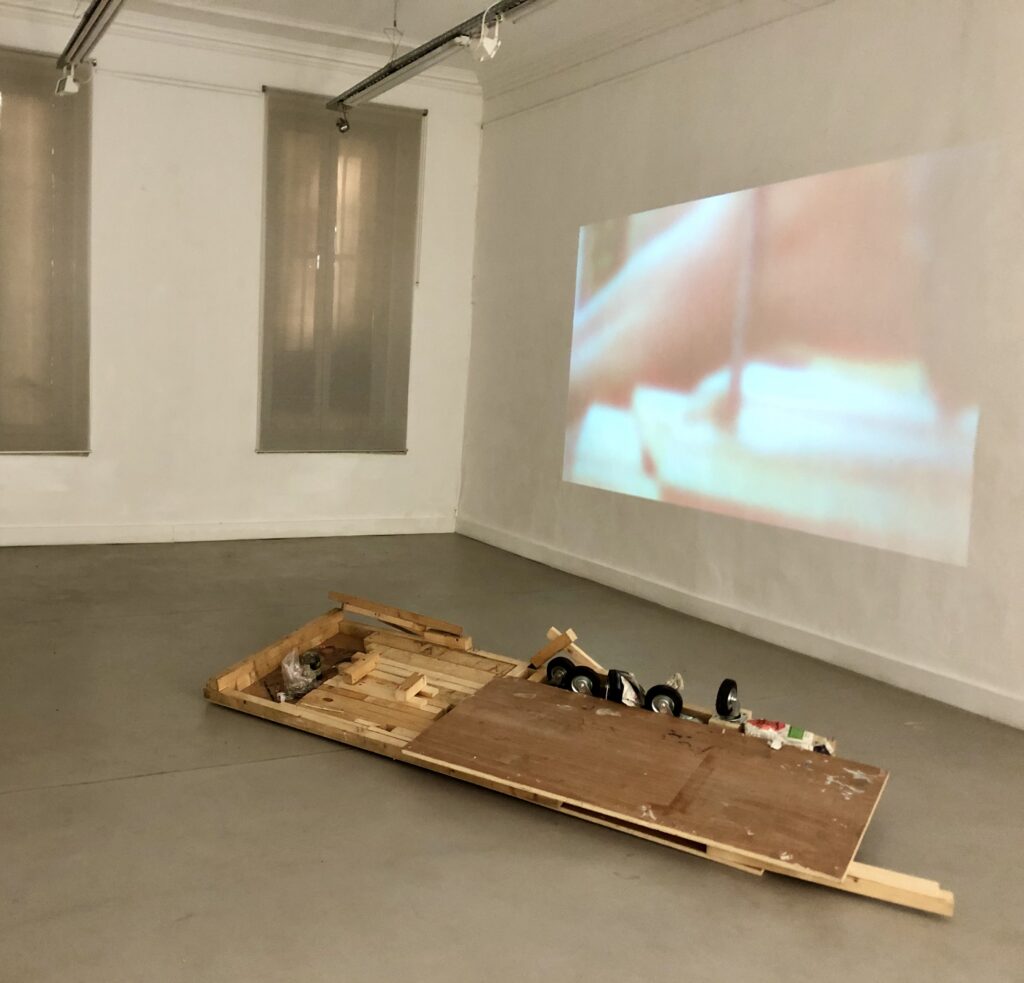
“Archéologie” de Charrette
” Charrette, it’s a bit like the story of Noah’s Ark in reverse. It also leaves a country breaking away from Europe. “ (L T)